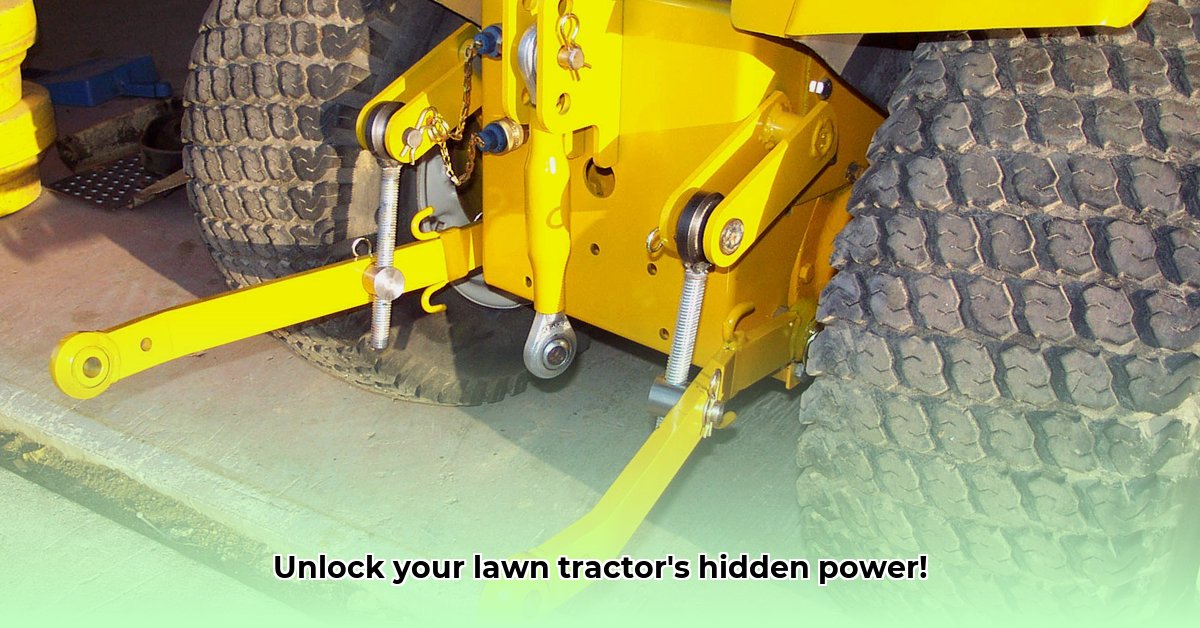
Want to transform your lawn tractor into a versatile yard work machine? Unlock its potential with a 3-point hitch! This guide provides clear, step-by-step instructions for selecting, installing, and maintaining your hitch and attachments, ensuring you get the most from your equipment. For even more detailed information, check out this helpful resource on 3-point hitch setups.
Understanding 3-Point Hitch Categories: Category 0 vs. Category 1
A 3-point hitch is a system connecting implements (like tillers or blades) to your tractor. It's crucial to understand the different categories to avoid damage. The primary difference between Category 0 and Category 1 hitches lies in the pin size, affecting the size and weight of attachments they can handle.
Category 0 hitches typically use a 5/8-inch pin and are found on smaller lawn tractors suitable for lighter tasks like aerating or tilling small areas. Category 1 hitches use a 1-inch pin and are fitted to more powerful tractors capable of handling heavier work, such as larger tilling jobs or operating a box blade.
Choosing the correct category is essential. Using a Category 1 attachment with a Category 0 hitch can cause serious damage to both the tractor and the attachment.
Identifying Your Tractor's Hitch Type: A Step-by-Step Guide
Before purchasing any attachments, confirm your tractor's hitch category. Here's how:
- Locate the Hitch: The hitch is the three-point connection system at the rear of your tractor.
- Examine the Lower Links: These are the downward-extending arms of the hitch.
- Measure the Pins: Carefully measure the diameter of the pins connecting the lower links. A 5/8-inch diameter indicates Category 0, while a 1-inch diameter signifies Category 1.
- Consult Your Owner's Manual: Your owner's manual will definitively specify the hitch category for your tractor model. This is the most reliable source.
Choosing Compatible Attachments: Matching Equipment for Optimal Performance
Once you know your hitch category, selecting compatible attachments is straightforward—ensure the attachment's category matches your tractor's. Trying to force an incompatible attachment can result in damage. Beyond category, consider your tractor's lifting capacity (found in your owner's manual). Exceeding this limit is dangerous and can cause severe damage.
Installing 3-Point Hitch Attachments: A Detailed Procedure
Safety First: Always engage the parking brake, disengage the PTO (power take-off), and turn off the engine before installing attachments.
Step 1: Preparation: Ensure the tractor is on level ground. Step 2: Connecting Lower Links: Carefully align the attachment's lower links with your tractor's hitch lower links. Insert the pins securely, ensuring a tight fit. Step 3: Attaching the Top Link: Connect the top link to both the tractor and the attachment to maintain stability; adjust for optimal alignment. Step 4: Hydraulic Connection (If Applicable): For hydraulic attachments, connect the hydraulic lines, making sure connections are secure to prevent leaks. Step 5: Test Lift: Raise the attachment slightly using the hydraulic lift. Check for proper alignment and smooth movement; correct any issues before fully engaging the attachment.
Troubleshooting Common Issues: Addressing Potential Problems
Even with careful attention, problems can arise. Here are some common issues and their solutions:
- Attachment Won't Lift: Check hydraulic fluid levels; low fluid is a frequent cause. Inspect hydraulic lines for leaks.
- Misalignment: Incorrect top link adjustment or improperly seated lower links can cause misalignment. Verify alignment and adjust as needed.
- Persistent Problems: If problems persist, refer to your owner's manual for troubleshooting guidance and consult online forums or a qualified mechanic.
Maintenance and Safety: Prolonging the Life of Your Hitch
Regular maintenance keeps your hitch in optimal condition.
- Fluid Checks: Regularly check and maintain correct hydraulic fluid levels.
- Component Inspections: Periodically inspect hitch components for signs of wear and tear (e.g., cracks, bends). Replace damaged parts immediately.
- Safe Operation: Always adhere to safety guidelines in your owner's manual. Never exceed the tractor's weight capacity.
By following this guide, you'll confidently operate your lawn tractor's 3-point hitch. Remember, the owner’s manual is your best resource for model-specific information and safety precautions. Always prioritize safety!